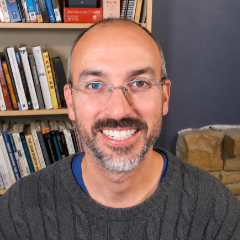
I've been on both sides of this.
As CEO of an early-stage startup, I've lived the founder's fear — the team going sideways,
the sense that things are slipping, the suspicion that something is deeply wrong and you
can't quite see what. I know what that feels like, and I know it doesn't fix itself.
As a CTO and technical lead across startups and enterprises, I've spent my career making
the work visible and creating the feedback loops that let founders drive what gets built —
without taking away the craft from the engineers who know how.
- Transparent Classroom — Founded and led as CEO and CTO. Built the engineering org from zero: chose the stack, designed the architecture, grew to a 14-person self-managed team with $3M ARR, consistently outperforming 100-person competitors.
- Mechanical Orchard — Used value stream mapping with actual data to make the waste visible to everyone, collaboratively designed a better process, and built a pull-based management system. Things got exponentially faster. Also led LLM adoption into the team's workflow.
- TalentWall — Assessed an unstable codebase and led a full rewrite — while simultaneously hardening the existing system to support a growing business. On time, no disruption.
- Nordstrom Innovation Lab — Built the lab's process from scratch (Lean Startup, Design Thinking, Liberating Structures), validated products at speed, then left teams able to run the process themselves.
- ThoughtWorks + Pivotal Labs — 9 years at two of the most respected technical consulting firms in the industry, leading teams and client engagements at early-stage startups and enterprise orgs.
I bring the technical depth to work directly with your engineers, the leadership
experience to set and hold a coherent direction, and the process fluency to build
a team that can execute. I'm as comfortable writing code as I am in a board conversation.
And I build toward a team that can run without me.